

Headboard gap filler:
why it keeps working its way out
If your filler keeps working its way out, you are solving the wrong problem. One test tells you which of the two you have.
What is a headboard gap filler?
Anything that closes the space between the top of the mattress and the headboard: a bolster, a foam wedge (often sold as a bed wedge pillow), a stuffed fabric tube. Whether it works depends on why the space is there:
- A fixed gap means the frame is longer than the mattress, or the headboard is mounted with clearance. A filler is the right answer and it will stay put.
- A returning gap means the mattress is travelling toward the foot of the bed. A filler gets pushed out, because the space keeps reopening behind it.
For the first, buy a bolster and you are done. We do not sell one. For the second, the fix is stopping the mattress moving, and that is what the Bedbinder does.
Which gap do you have?
Push the mattress firmly up against the headboard, as far as it goes. Then look.
The gap closes completely
Your mattress fits the frame. The space you keep seeing is one the mattress created by moving, and it will be back within days. This is a movement problem, and stuffing it is treating the symptom.
A space is still there
The frame is longer than the mattress, or the headboard sits proud of the base. Nothing is moving and nothing is wrong. This is a fitting problem and a filler is exactly the right answer.
Worth doing the test before you buy anything, because a filler for a moving mattress is the single most returned item in this whole category.
What actually fills a headboard gap
None of these are ours. If this is your situation, this section is the whole answer.
- A long bolster or body pillow. The simplest option, and it doubles as something to lean on. Choose one at least as long as the bed is wide.
- A wedge-shaped filler, often sold as a bed wedge pillow. Better than a round bolster, because the mattress presses down on the sloped face and holds it in place instead of squeezing it upward.
- A purpose-made headboard pillow. Same idea with a fitted cover, so it matches the bedding rather than looking like a spare cushion.
- DIY: a pool noodle or rolled towel in a pillowcase. Costs nothing, works, and nobody sees it once the bed is made.
The one thing to check first
Measure the gap before you order. Most fillers are made for two to four inches. Wider than that and you are usually looking at a frame built for a longer mattress, which is worth confirming before you spend anything.
Which size to buy
Buy a filler as long as your mattress is wide. Wedge pillows are sold by bed size, so a King wedge fits a King bed.
Standard US widths: Twin 38 inches, Full 54, Queen 60, King 76, California King 72.
The same logic applies to the gap between the bed and the wall. A frame that never sat flush needs a filler. A bed that walks away from the wall over weeks is moving, and grip under the feet fixes that better than anything pushed in behind it.
Why the filler keeps working its way out
Here the gap is a symptom. Fill it and you get a week, then you are back where you started.
A mattress stays where it is on friction alone. Every time you get in, sit on the edge or turn over, you push it a fraction toward the foot of the bed. Nothing pushes it back, so the space at the head end grows night after night.
When there are two mattresses, it is worse
Two mattresses do not only drift apart sideways. They also travel down the bed at their own pace, so you get a gap in the middle and a gap at the top, and straightening one makes the other look worse.
Joining the two stops both at once. They can no longer move independently, so they stay square to the headboard as one surface. That is what the Bedbinder Deluxe is: an 80 cm band under both mattresses, three buckles, fitted in 60 seconds.
If it is one mattress that creeps
Then it is grip you need, not a connector. A non-slip pad or a sheet of rubber liner between mattress and base costs a few dollars and usually settles it. We go through that properly in how to keep a mattress from sliding, and we do not sell that either.
What joining two mattresses looks like
Across the middle, straps underneath, three buckles. About 60 seconds, no tools.
4.1/5 from 3,765 reviews · more than 250,000 sold
From people whose mattresses were the ones moving
Three American customers, all in the second category.
Searched a long time for this.
“I searched for awhile for a solution to having the twin bed components of our adjustable king moving apart. This was one of the only solutions I found that fit my needs.”
Solved several problems at once.
“This has solved so many problems we were having with the bed separating and moving. The adjustable still works fine.”
Keeps the beds from slipping apart.
“It works well to keep the beds from slipping apart, which created a gap that my cat kept falling into.”
Questions about the gap at the top of the bed
Including the cases where a cushion is the whole answer.
What is a headboard gap filler?
Anything that closes the space between the top of the mattress and the headboard: a long bolster, a foam wedge, a stuffed fabric tube, or a purpose-made pillow. They all work on the same principle, which is filling a space rather than removing the reason it is there.
Why is there a gap between my headboard and mattress?
Two reasons, and they need opposite fixes. Either the frame is longer than the mattress or the headboard is mounted with clearance, in which case the gap is fixed and a filler solves it. Or the mattress creeps toward the foot of the bed, in which case a filler gets pushed out and the gap returns.
How do I know which of the two I have?
Push the mattress firmly up against the headboard. If the gap closes completely and stays closed for a week, it is a movement problem. If a space is still there with the mattress pushed all the way up, the frame is simply longer than the mattress and you need a filler.
What can I use as a DIY headboard gap filler?
A long body pillow, a rolled towel inside a pillowcase, or a foam pool noodle cut to the bed width. These cost nothing and work fine on a fixed gap. On a moving mattress they slide out within a night or two, same as the shop-bought versions.
Does a bed wedge gap filler work at the headboard?
On a fixed gap, yes. A wedge shape wants to stay put better than a round bolster because the mattress presses down on the sloped face. On a mattress that creeps, no. Nothing that sits loose in a gap stays in a gap that keeps opening.
What size bed wedge pillow do I need?
The same size as your mattress: a King wedge for a King bed, a Queen wedge for a Queen. Then check the depth. The wedge has to be at least as thick as the gap is wide.
What about the gap between the bed and the wall?
Same two causes. A bed frame that does not sit flush to the wall needs a filler or needs moving. A bed that walks away from the wall over weeks is moving, usually because the floor is smooth, and grip under the frame feet solves that better than anything you stuff behind it.
Can two mattresses cause a headboard gap?
Yes, and it is a common one. Two mattresses that drift apart sideways also work their way down the bed, so a gap opens at the top as well as the middle. Joining the two mattresses stops both at once, because they can no longer travel independently.
Will a filler damage my headboard or mattress?
A soft filler will not, but a rigid one wedged in under pressure can mark an upholstered headboard over time, and repeated compression flattens cheap foam within months. That is the practical argument for fixing movement where movement is the cause.
If the gap is in the middle instead
Three pages for the gap between two mattresses rather than behind them.
Bed gap fillers, honestly
The two kinds of gap filler, and when a foam one is genuinely enough.
Read moreWhen a mattress will not stay put
Grip or connection: which of the two problems you have, and the cheap fix for one of them.
Read moreWhat a mattress connector is
Band width, buckles and strap count: what separates one from another.
Read more

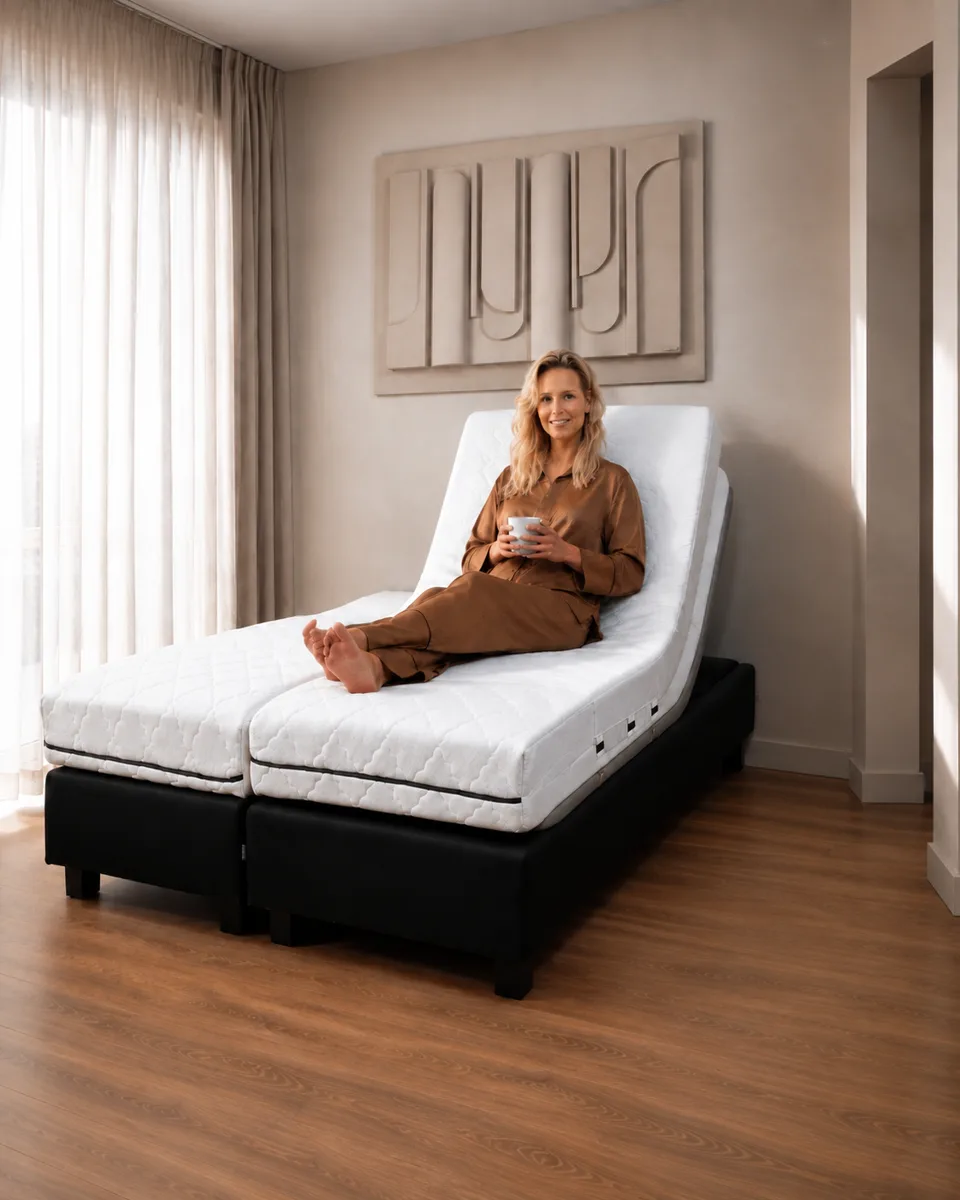
Fill it again next month, or stop it moving?
If two mattresses are the reason, this is the fix. Fitted in 60 seconds, no tools.
90 nights to try it when you order on bedbinderdeluxe.com. On Amazon, their 30-day return window applies.