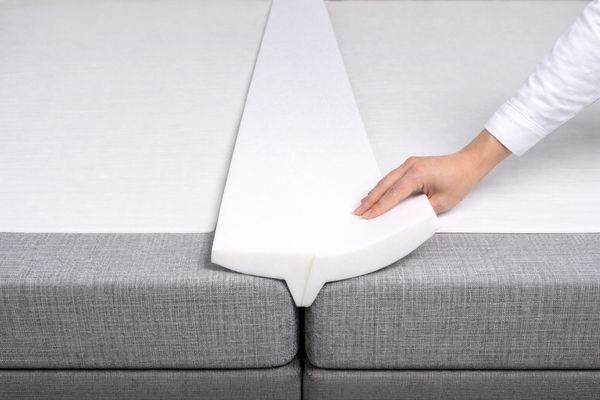
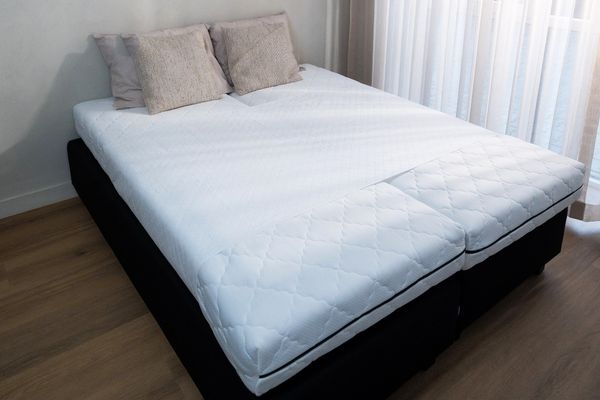
1. Check if it fits your mattress size
A good mattress connector works with any standard mattress size. In Europe, that means 80x200, 90x200, 100x200, and 120x200 cm. In the US, it should fit Twin, Twin XL, Full, and Queen. If your two mattresses are different sizes, that is fine. The connector spans the gap, so individual sizes do not matter as long as the length is the same.
2. Look for anti-slip grip
This is the most important feature. A mattress connector without a non-slip underside will shift during the night. The mattresses drift apart again, and you are back to square one. Look for a connector with a textured or rubberized bottom layer that grips both mattresses firmly.
3. Consider the material
The best mattress connectors are made from breathable, hypoallergenic materials. You want something that does not trap heat. Avoid cheap foam wedges that compress after a few weeks. A good connector should feel flat under your sheet. If you can feel a bump or ridge, it is the wrong product.
4. Think about mattress height differences
If your two mattresses have the same height, any connector works. If there is a small difference (1 to 3 cm), the Bedbinder handles that easily. For bigger differences, the adjustable strap system lets you tighten each side to match.
5. Check the return policy
You will not know if a mattress connector truly works until you sleep on it for a few nights. The Bedbinder comes with a 30-day sleep trial. Not happy? Full refund, no questions asked.